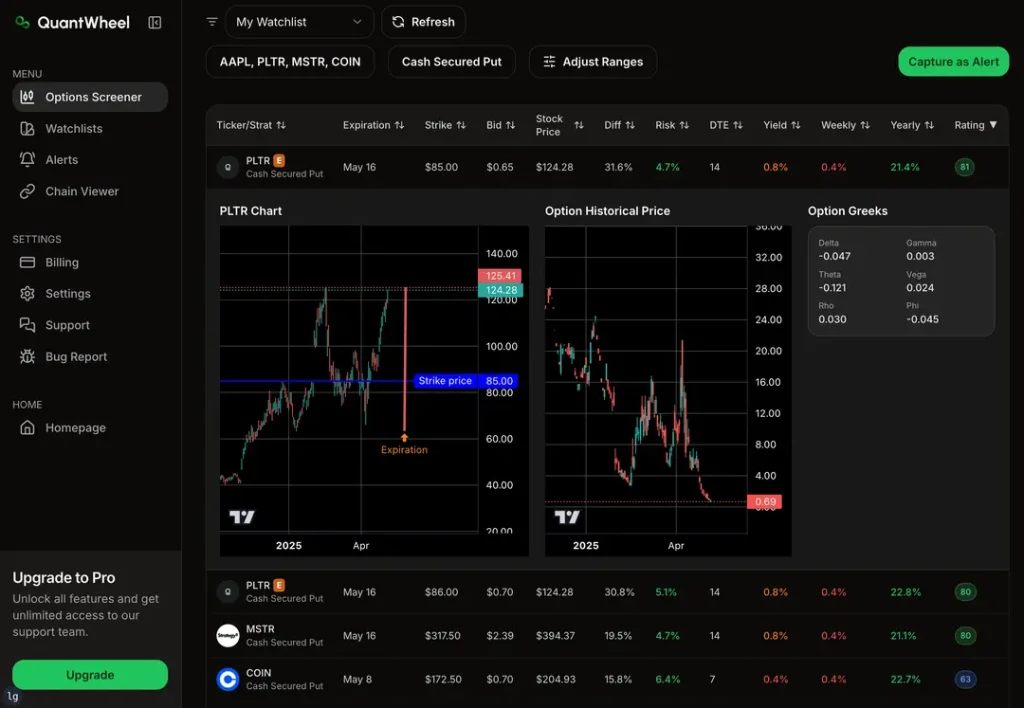
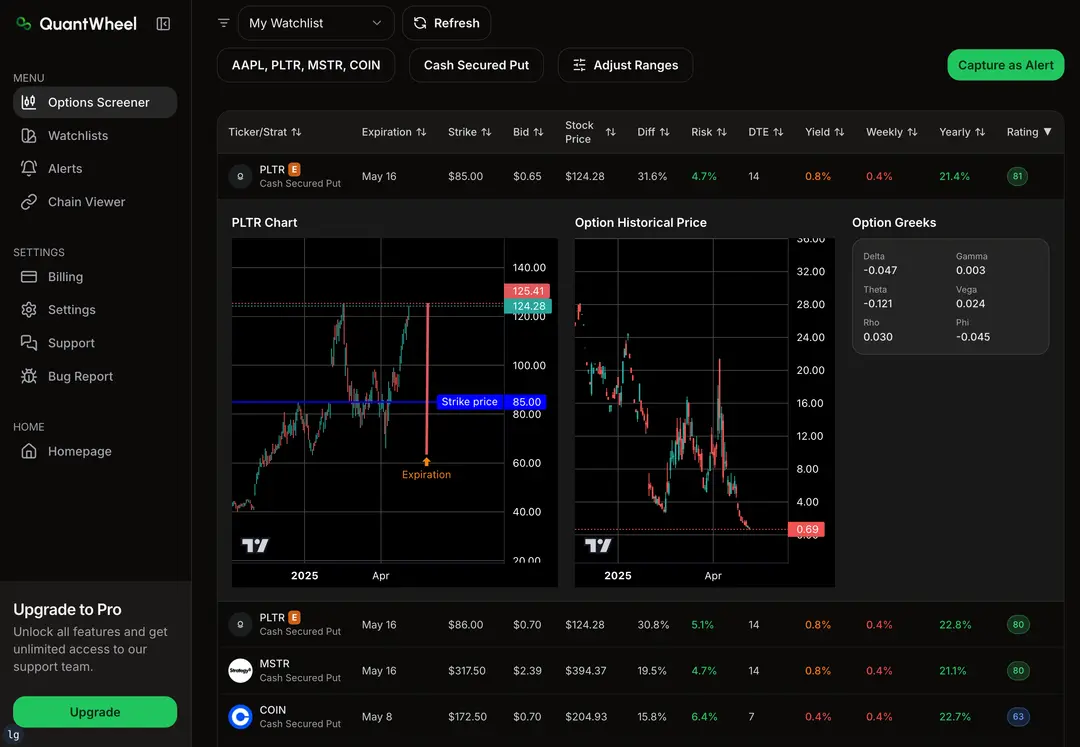
The wheel strategy is an options trading method where you sell puts to potentially buy stocks at lower prices, then sell covered calls on those shares to generate income. This approach works best when you pick quality stocks and stick to a steady plan. Many traders like it because it can create regular income while building a stock portfolio.
The wheel strategy can realistically produce 24-36% annual returns when done correctly with the right stocks. You start by selling cash-secured puts on stocks you want to own. If the stock price drops below your strike price, you get assigned the shares. Then you sell covered calls on those shares to collect more premium income.
The key to success with the wheel strategy is choosing good companies rather than chasing the highest option premiums. Quality stocks protect your money better during market downturns. You also need realistic expectations about returns and must avoid common mistakes that can hurt your profits.
The Wheel Strategy Explained: The Complete Cycle From Puts To Calls
The wheel strategy is a three-step options trading approach. You start by selling put options, then move to owning stock, and finally sell covered calls.
Step 1: Sell Cash-Secured Puts
You sell put contracts on stocks you want to own. This means you collect premium upfront from other traders. You need enough cash to buy 100 shares per contract if the option gets assigned.
Choose a strike price below the current stock price. If the stock stays above your strike price at expiration, you keep the premium. The put option expires worthless and you start the process again.
Step 2: Get Assigned and Own Stock
If the stock price drops below your strike price, you get assignment. This means you must buy 100 shares at the strike price. You now own the stock but already collected premium to lower your cost.
Step 3: Sell Covered Calls
Now you sell call options against your stock position. You collect more premium while you wait for the stock price to recover. Choose a strike price above your stock cost.
If the call option expires worthless, you keep the premium and sell another call. If the call gets assigned, you sell your shares at the strike price and complete the wheel.
The execution of this strategy lets you generate profit from premium collection at each step.
How It Works Over Time
The wheel strategy builds income in your investment account over several months or years. You collect cash from selling puts and calls repeatedly.
Each cycle takes about 30 to 45 days on average. Short-term price movements don’t hurt your long-term financial planning much.
Your account grows through three main ways:
- Premium from selling puts
- Premium from selling calls
- Stock gains when you sell shares
Risk management gets easier with practice. You learn which stocks work best for your goals.
The strategy works in different market conditions. When stocks go up, you keep premiums and may sell shares for profit. When stocks go down, you still collect cash from premiums.
| Market Condition | What Happens | Income Source |
| Rising prices | Keep premiums, may sell stock | Put premiums, call premiums, capital gains |
| Falling prices | Keep premiums, may buy stock | Put and call premiums |
| Flat prices | Keep most premiums | Put and call premiums |
Your investment grows slowly but steadily. Most traders see better results after six months of regular practice.
The wheel strategy fits well into long-term wealth building. You can use it with retirement accounts or regular trading accounts. The key is picking the right stocks and staying consistent with your approach.
Stock Selection For The Wheel: Quality Vs High Premium (Spoiler: Quality Wins)
Many traders pick stocks for the wheel based only on high option premiums. This approach often leads to poor results.
Quality stocks beat high premium stocks in the long run. You want companies with strong business models, not just expensive options.
High premiums usually mean high risk. The market prices options higher when stocks are unstable or facing problems.
What Makes A Quality Stock
Look for these key factors when choosing stocks for your wheel positions:
- Strong earnings growth
- Low debt levels
- Good dividend history
- Stable business model
Avoid meme stocks and volatile companies. These might offer tempting premiums but often result in assignment at bad prices.
Premium vs Quality Trade-off
Quality stocks offer lower premiums but better safety. You reduce your risk of holding shares in declining companies.
Your portfolio benefits from diversification across solid companies. Pick 3-5 different sectors to spread risk.
ETFs can work for the wheel too. They offer built-in diversification and steady premiums. Consider SPY or QQQ for beginners.
Risk Management Approach
Match your stock selection to your risk tolerance. Conservative investors should stick to blue-chip companies with dividends.
Market conditions affect all strategies. Quality stocks perform better during downturns than speculative plays.
Focus on companies you’d be happy owning long-term. This mindset helps you pick better wheel candidates and sleep better at night.
Value investors often find the best wheel opportunities in undervalued quality stocks.
Realistic Return Expectations: 24-36% Annually (Not 10% Monthly)
The wheel strategy can generate solid returns, but you need realistic expectations. Many beginners expect huge monthly gains that simply aren’t sustainable.
Annual returns of 24-36% are achievable with consistent execution. This means your account grows by roughly 2-3% each month on average.
Some months you’ll make more. Other months you’ll make less or even lose money. The key is long-term success over many trades.
| Realistic Timeline | Expected Return Range |
| Monthly | 1-4% |
| Quarterly | 6-12% |
| Annually | 24-36% |
Your returns depend on several factors. Market conditions affect premium prices. Your stock selection impacts capital gains potential.
Lowering your cost basis through put premiums helps boost overall gains. Each successful put sale reduces what you pay for shares.
The strategy works best when you focus on consistent monthly income rather than home run trades. Small, steady gains compound over time.
Don’t chase extremely high-premium options. They often come with stocks that have serious problems. This increases your risk of large losses.
Your potential returns stay highest when you pick quality stocks. Good companies recover faster from temporary drops.
Remember that 30% annual gains beat most professional fund managers. These returns can build serious wealth over several years.
The 5 Biggest Wheel Mistakes (And How To Avoid Them)
Mistake 1: Poor Risk Management Many traders risk too much capital on single trades. You should never risk more than 2-3% of your account on one wheel position.
Set strict rules about position size before you start trading. This way protects your money when the market moves against you.
Mistake 2: Ignoring Volatility Changes High volatility can create big losses fast. You need to watch how much the stock price moves up and down.
When volatility spikes, your risks go up too. Consider smaller positions during these times.
Mistake 3: Picking Bad Stocks Some traders choose stocks they don’t want to own. This creates problems when you get assigned shares.
Only wheel stocks you’d be happy to hold long-term. Research the company before you start the strategy.
Mistake 4: Not Planning for Assignment Getting assigned shares is part of the wheel strategy. Many new traders panic when this happens.
Keep enough cash ready to buy 100 shares of your chosen stock. Plan for assignment from day one.
Mistake 5: Chasing High Premiums Big premiums often mean big risks. Don’t pick options just because they pay more money.
Focus on steady, reliable stocks instead of high-risk plays. Consistent small gains beat large losses every time.
Key Considerations:
- Watch market news that affects your stocks
- Track your wins and losses over time
- Adjust your approach based on market conditions
- Keep learning about better ways to manage risk