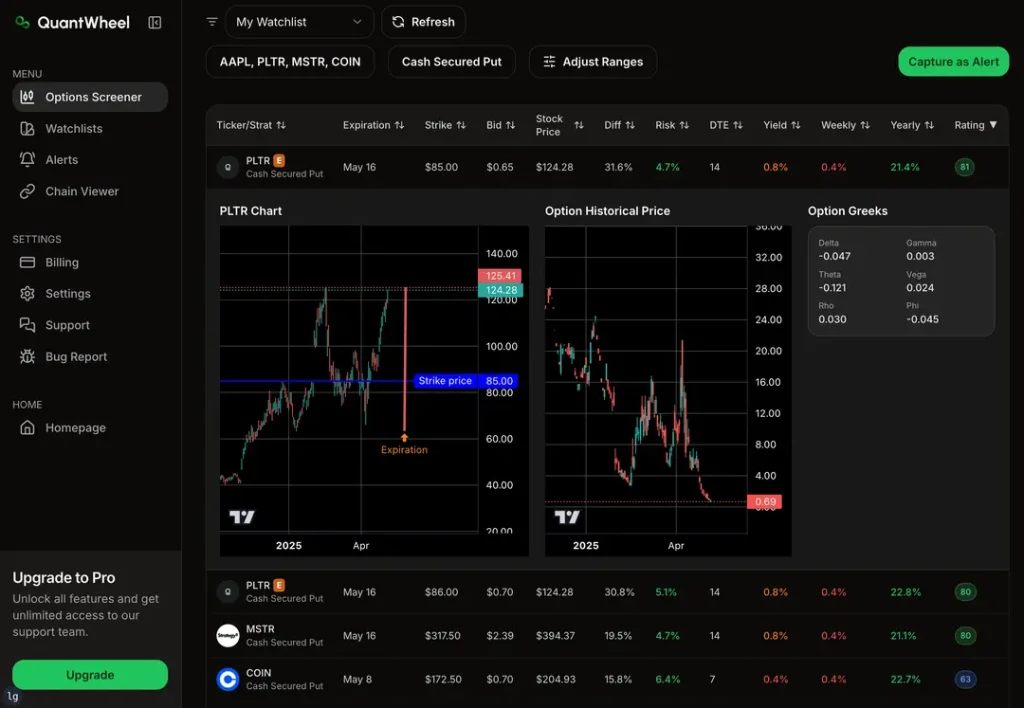
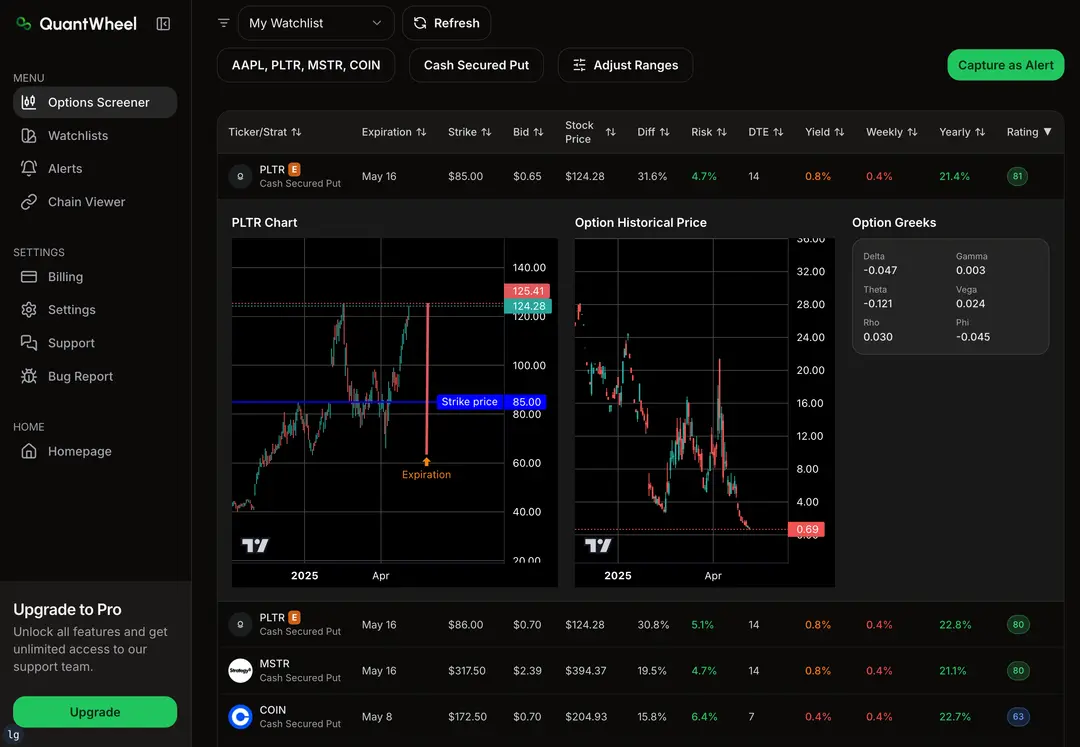
What the best traders need? A strict stock selection filter.
The wheel strategy requires careful stock selection to maximize income and minimize risk. This options trading approach works best when you choose stocks that are stable, liquid, and have strong fundamentals. The key to successful wheel strategy stock selection is finding high-quality companies with consistent performance that you wouldn’t mind owning long-term.
You need to focus on stocks with good option liquidity and reasonable volatility. High-quality dividend-paying stocks often work well because they provide income even when you get assigned shares. The goal is to pick companies that will likely recover if their stock price drops.
Your stock selection process should include checking financial health, market cap, and trading volume. Avoid penny stocks or companies with poor fundamentals. The best candidates are established companies in stable industries that have steady cash flow and manageable debt levels.
Fundamentals of Wheel Strategy Stock Selection
The wheel strategy requires careful stock selection based on specific criteria that balance income generation with risk management. Success depends on choosing stocks with strong fundamentals, adequate liquidity, and optimal volatility levels.
Understanding the Wheel Strategy Process
The wheel strategy is an options trading approach that generates premium income through two main steps. You start by selling cash-secured puts on stocks you’re willing to own. If the puts expire worthless, you keep the premium and repeat the process.
When assignment occurs, you own the stock at your chosen strike price. You then sell covered calls against your shares to generate additional premium income. This creates a cycle where you collect premiums whether you own the stock or not.
Your capital allocation stays consistent throughout the process. You need enough cash to buy 100 shares if assigned on your put options. This requirement makes position sizing crucial for your overall portfolio management.
The strategy works best in sideways or slightly bullish markets. You benefit from time decay on the options you sell while building a diversified portfolio of quality equities over time.
Key Criteria for Choosing Stocks
Stock selection forms the foundation of successful wheel strategy implementation. You should focus on companies with strong financial health and stable business models. Look for stocks with consistent earnings growth and manageable debt levels.
Choose stocks you genuinely want to own long-term. Assignment will happen, so avoid companies with poor fundamentals or declining sectors. Your analysis should include revenue trends, profit margins, and competitive positioning.
Market capitalization matters for liquidity and stability. Large-cap stocks typically offer more predictable price movements and better options liquidity. Mid-cap stocks can provide higher premiums but carry additional risk.
Consider the sector diversification across your positions. Avoid concentrating too heavily in any single industry or market segment. This approach protects your portfolio from sector-specific downturns while maintaining steady income generation.
Assessing Volatility, Liquidity, and Premiums
Volatility directly impacts the premiums you receive from selling options. Higher volatility increases premium income but also raises assignment risk. You want stocks with moderate volatility that provide attractive premiums without excessive price swings.
Options liquidity ensures you can enter and exit positions efficiently. Check the bid-ask spreads on both puts and calls before selecting stocks. Wide spreads reduce your potential returns and make position management more difficult.
Premium levels should justify the risk you’re taking with your capital. Compare the annualized returns from selling options to other investment alternatives. Factor in the potential for capital appreciation alongside the premium income.
Trading volume and open interest indicate healthy options markets. Look for stocks with consistent daily volume above 500,000 shares. Options should have open interest of at least 100 contracts at your target strike prices.
Advanced Considerations for Optimizing Stock Selection
Smart stock selection for the wheel strategy requires careful attention to risk management, market timing, and premium optimization. These advanced techniques help you maximize returns while protecting your capital.
Risk Management and Position Sizing
Your position size determines how much capital you risk on each trade. Never put more than 5-10% of your account into a single stock position.
Calculate your risk tolerance before entering any trades. If a stock costs $50 per share and you sell puts at a $45 strike price, you could face losses if the stock drops below your cost basis.
Position Sizing Formula:
- Account size: $50,000
- Maximum risk per position: 5% = $2,500
- Stock price: $50
- Maximum shares: 50 shares
Use stop-loss rules for your positions. If a stock drops 20% below your average cost basis, consider closing the position to limit losses.
Diversify across different stocks to reduce risk. Don’t run the wheel strategy on just one or two stocks. Aim for 5-8 different positions.
Analyzing Market Trends and Timing
Market conditions affect option premiums and stock price movements. High volatility periods offer better premium collection opportunities.
Watch for trends in your target stocks. Avoid starting new positions during strong downtrends. Look for stocks in sideways or upward trends.
Check liquidity before trading. Stocks with low volume make it harder to exit positions when needed.
Key Timing Indicators:
- High volatility: Better put premiums
- Low volatility: Lower premiums, safer entries
- Earnings announcements: Avoid 1-2 weeks before
- Market corrections: Wait for stabilization
Use technical analysis to time your entries. Look for support levels when selling puts. This gives you better strike price selection.
Sector Allocation and Diversification
Spread your positions across different sectors to reduce correlation risk. Don’t put all your capital in tech stocks or energy stocks.
Recommended Sector Mix:
| Sector | Allocation |
| Technology | 20-30% |
| Healthcare | 15-20% |
| Financials | 15-20% |
| Consumer | 15-20% |
| Industrial | 10-15% |
| Other | 10-15% |
Choose ETFs for sector exposure if individual stock picking is difficult. Popular ETFs like SPY, QQQ, and IWM work well for the wheel strategy.
Avoid sectors during their weak seasons. Energy stocks often struggle in spring. Retail stocks can be volatile before earnings.
Maximizing Profits through Premium Collection
Focus on stocks with high option premiums relative to their risk. Compare premium yields across different stocks and strike prices.
Target 1-3% monthly premium collection on your capital. This translates to 12-36% annual returns from premium alone.
Premium Optimization Strategies:
- Sell puts at 30-45 days to expiration
- Choose strike prices 10-15% below current stock price
- Roll positions when premium drops to 20-25% of original value
- Sell covered calls at resistance levels
Time your option sales around volatility spikes. News events and earnings create higher premiums for short periods.
Monitor your premium to time value ratio. Options with more time value give you better profit potential. Avoid selling options with mostly intrinsic value.
Close positions early when you capture 50-70% of the maximum profit. This frees up capital for new trades with better risk-reward ratios.