Options trading can seem complex, but calls and puts are simply contracts that give you the right to buy or sell stocks at specific prices.
A call option gives you the right to buy a stock at a set price, while a put option gives you the right to sell a stock at a set price. These tools let you profit from stock movements without owning the actual shares.
Many new traders avoid options because they think they’re too risky or hard to understand. The truth is that buying calls and puts can be less risky than owning stocks outright since you only risk the premium you pay for the contract.
Learning about long calls and long puts opens up new ways to make money in the stock market. You can profit when stocks go up, down, or even sideways with the right strategy.
Understanding Calls and Puts
Options contracts give you the right to buy or sell shares at a specific strike price before expiration. You pay a premium for these rights, while sellers take on obligations.
What Are Calls and Puts?
Call options give you the right to buy shares of an underlying asset at a set price. When you purchase a call option, you become a long call holder. This means you can buy 100 shares per contract at the strike price.
Put options give you the right to sell shares of an underlying security at a set price. When you buy a put option, you hold a long put position. This lets you sell 100 shares per contract at the strike price.
Each option contract controls 100 shares of the underlying stock. You don’t own the actual shares when you buy options. You only have the right to buy or sell them.
Long calls work best when stock prices go up. Long puts work best when stock prices go down. Both give you rights without forcing you to act.
Key Terms: Strike Price, Expiration, and Premium
The strike price is the price at which you can buy or sell shares. This price stays the same throughout the life of your option contract. You choose from different strike prices when buying options.
The expiration date is when your option contract ends. Most options expire on Fridays. You must use your rights before this date or they disappear.
The premium is what you pay to buy the option. This cost is per share, so you multiply by 100 for the total price. For example, a $2.00 premium costs $200 per contract.
| Term | Definition | Example |
| Strike Price | Fixed buy/sell price | $50 per share |
| Expiration | Contract end date | December 15, 2025 |
| Premium | Cost to buy option | $3.00 ($300 per contract) |
The Rights and Obligations of Buyers and Sellers
As an option buyer, you have rights but no obligations. You can choose to exercise your call or put option. You can also sell your option before expiration or let it expire worthless.
Option sellers have obligations. Call sellers must sell shares if you exercise your call. Put sellers must buy shares if you exercise your put. Sellers receive the premium as payment for taking on these obligations.
Your maximum loss as a buyer equals the premium you paid. Your potential gains depend on how much the underlying asset moves in your favor.
Long calls have unlimited profit potential as stock prices rise. Long puts have high profit potential as stock prices fall toward zero.
How Calls and Puts Work in Options Trading
Options trading involves specific mechanics that control how these contracts function in the market. Both American and European style options offer different exercise rights, while market conditions directly impact the value of your positions.
Trading Mechanics and Market Participants
When you trade options, you interact with four main types of market participants. Call buyers purchase the right to buy stocks at a set price. Call sellers collect payment but must sell shares if the buyer exercises the option.
Put buyers pay for the right to sell stocks at a specific price. Put sellers receive money upfront but must buy shares if the option gets exercised.
Long calls give you the right to buy 100 shares of stock per contract. You pay a premium to the seller for this right. If XYZ stock trades at $50 and you buy a $45 call, you can purchase shares at $45 regardless of the current market price.
Long puts grant you the right to sell 100 shares at the strike price. When you buy a put on XYZ stock with a $55 strike price, you can sell shares at $55 even if the stock price drops to $40.
The options market connects buyers and sellers through exchanges. Market makers provide liquidity by offering to buy and sell contracts throughout the trading day.
Examples of Call and Put Option Contracts
A typical call option scenario involves XYZ stock trading at $100. You buy a call with a $105 strike price for $2 per share. This contract costs you $200 since each option controls 100 shares.
If XYZ rises to $110, your call becomes valuable. You can exercise the option to buy shares at $105 and immediately sell them at the $110 market price. Your profit equals $3 per share after subtracting the $2 premium you paid.
For put options, consider XYZ stock at $80. You purchase a put with an $85 strike price for $3 per share. The total cost is $300 for one contract.
If XYZ drops to $70, your put gains value. You can buy shares at the $70 market price and exercise your right to sell them at $85. This generates a $12 profit per share before considering the $3 premium paid.
Companies, ETFs, commodities, and funds all offer options contracts. Each contract follows the same basic structure with strike prices, expiration dates, and premiums.
Call and Put Value in Changing Market Conditions
Long calls increase in value when stock prices rise above the strike price. Time decay reduces option value as expiration approaches. Higher volatility typically increases call premiums since larger price moves become more likely.
Long puts gain value when stock prices fall below the strike price. These options also lose value over time due to time decay. Market uncertainty and volatility usually boost put premiums.
Interest rates affect option prices differently. Rising rates tend to increase call values while decreasing put values. Dividend payments on the underlying stock can impact both call and put prices.
| Market Condition | Long Call Value | Long Put Value |
| Stock price rises | Increases | Decreases |
| Stock price falls | Decreases | Increases |
| Time passes | Decreases | Decreases |
| Volatility rises | Increases | Increases |
Your options can expire worthless if they finish out of the money. This means calls expire worthless when the stock price stays below the strike price. Puts expire worthless when the stock price remains above the strike price.
American and European Styles of Options
American options allow you to exercise your contracts at any point before expiration. Most stock options in the United States follow American style rules. This gives you flexibility to exercise early if market conditions favor immediate action.
European options only permit exercise on the expiration date itself. Many index options and some ETF options use European style terms. You cannot exercise these contracts early even if doing so would be profitable.
The exercise style affects your trading strategy. With American calls on dividend-paying stocks, you might exercise before the ex-dividend date. European options eliminate this choice and require you to wait until expiration.
Most individual investors rarely exercise options early. Instead, you typically sell profitable contracts back to the market before expiration. This approach often provides better returns than exercising and dealing with the underlying shares.
American style options usually trade at slightly higher premiums than European options. This price difference reflects the additional flexibility that early exercise provides to option buyers.
Strategies and Risks Involving Calls and Puts
Options trading combines multiple strategies with varying risk levels and profit potential. These approaches can generate income, protect your portfolio, or amplify returns through leverage.
Popular Options Trading Strategies
Long calls represent the most basic bullish strategy. You buy a call option when you expect the stock price to rise above the strike price. Your maximum loss equals the premium paid. Your profit potential is unlimited as the stock price climbs.
Long puts work as the primary bearish strategy. You purchase put options when expecting stock prices to fall. The maximum loss stays limited to the premium cost. Profits increase as the stock drops below the strike price.
Covered calls involve owning 100 shares of stock and selling call options against them. This strategy generates income from option premiums. You keep the premium if the stock stays below the strike price.
Protective puts act like insurance for your stock holdings. You buy puts while owning shares. This limits your downside losses while maintaining upside potential.
Spreads combine buying and selling options simultaneously. Bull call spreads limit both risk and reward. Bear put spreads profit from declining prices within defined ranges.
Risk Management and Hedging with Options
Options serve as powerful hedge tools for your investment portfolio. Protective puts guard against stock losses without selling your position. You pay premiums to limit downside risk while keeping profit potential.
Portfolio hedging uses index puts to protect multiple holdings at once. This costs less than buying individual stock puts. Your account stays protected during market declines.
Risk levels vary by strategy. Long calls and long puts limit losses to premium amounts. Selling naked options creates unlimited loss potential. Spreads define maximum risks upfront.
Position sizing affects your financial exposure. Never risk more than you can afford to lose. Most professionals recommend limiting options trades to 5-10% of total portfolio value.
Leverage, Profit, and Loss Potentials
Options provide significant leverage compared to buying stocks directly. A $500 call option might control $10,000 worth of shares. This amplifies both profits and losses.
Long calls multiply returns when stocks rise. A 10% stock increase might create 100% option gains. However, options expire worthless if stocks don’t move enough.
Long puts magnify profits during stock declines. Small downward moves create large percentage gains. Time decay works against you as expiration approaches.
Leverage cuts both ways in your trading account. Winners can double or triple quickly. Losers often result in total premium loss. Managing position sizes becomes critical with leveraged investments.
Portfolio Applications and Income Generation
Income strategies help generate cash flow from your holdings. Covered calls produce monthly premiums from stock positions. This works best with stable or slowly rising stocks.
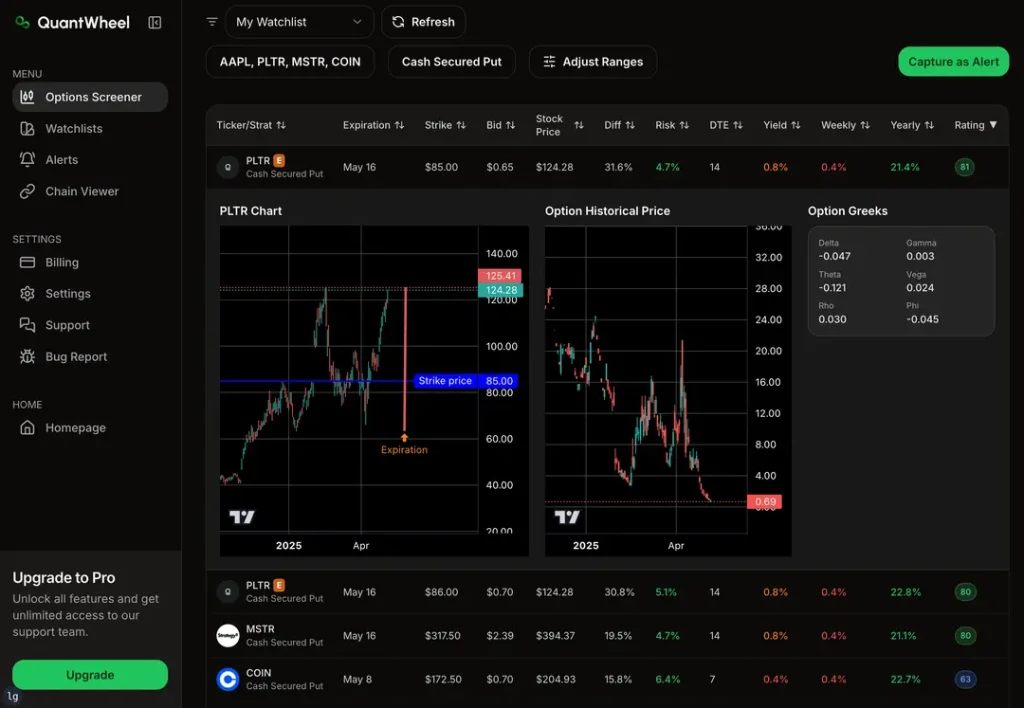
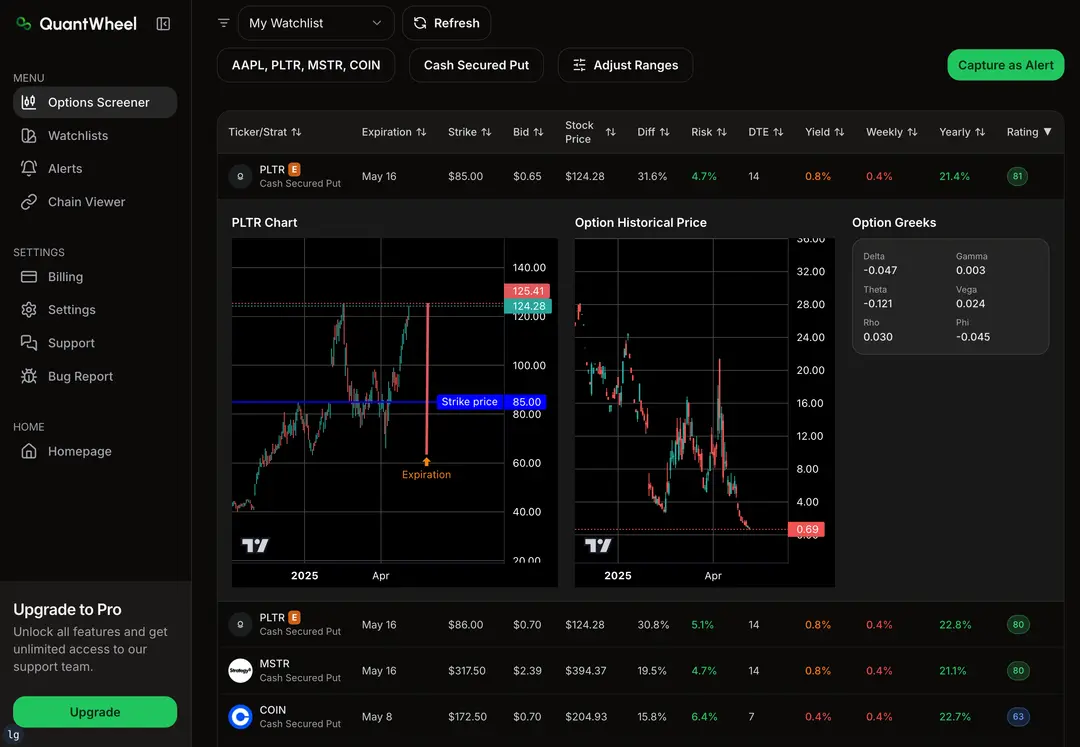
Cash-secured puts create income while potentially acquiring stocks at lower prices. You collect premiums and might buy shares below market value.
Portfolio diversification benefits from options strategies. Different approaches profit in various market conditions. Combining strategies reduces overall risk levels.
Professional money managers use options for tactical adjustments. They hedge during uncertain periods and generate income during sideways markets. Options provide flexibility that stock-only portfolios lack.