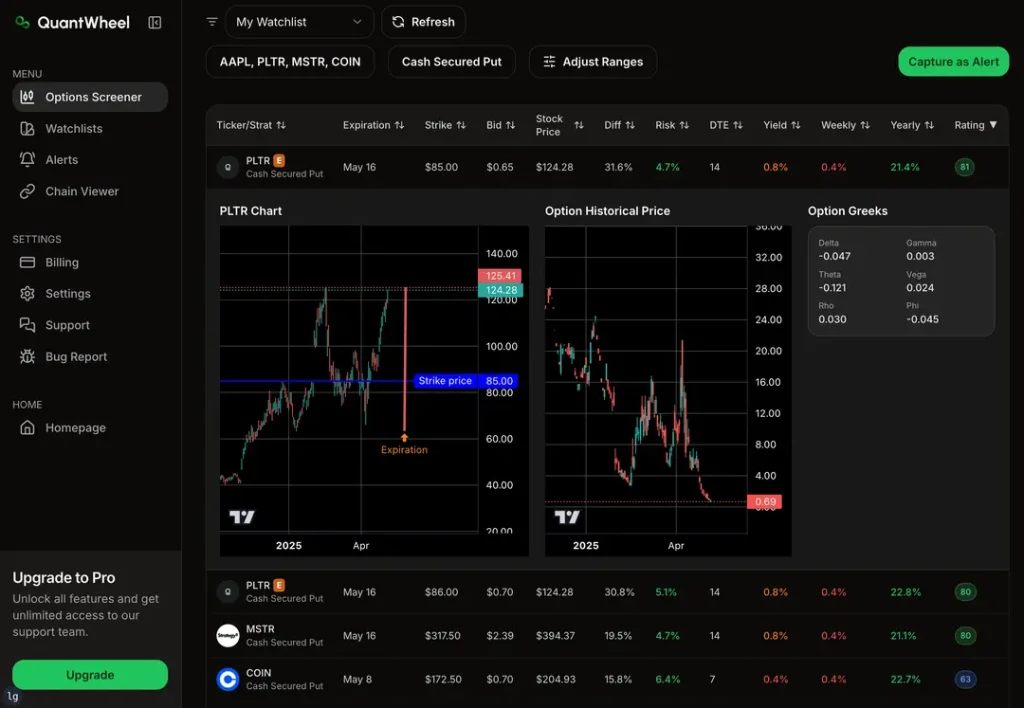
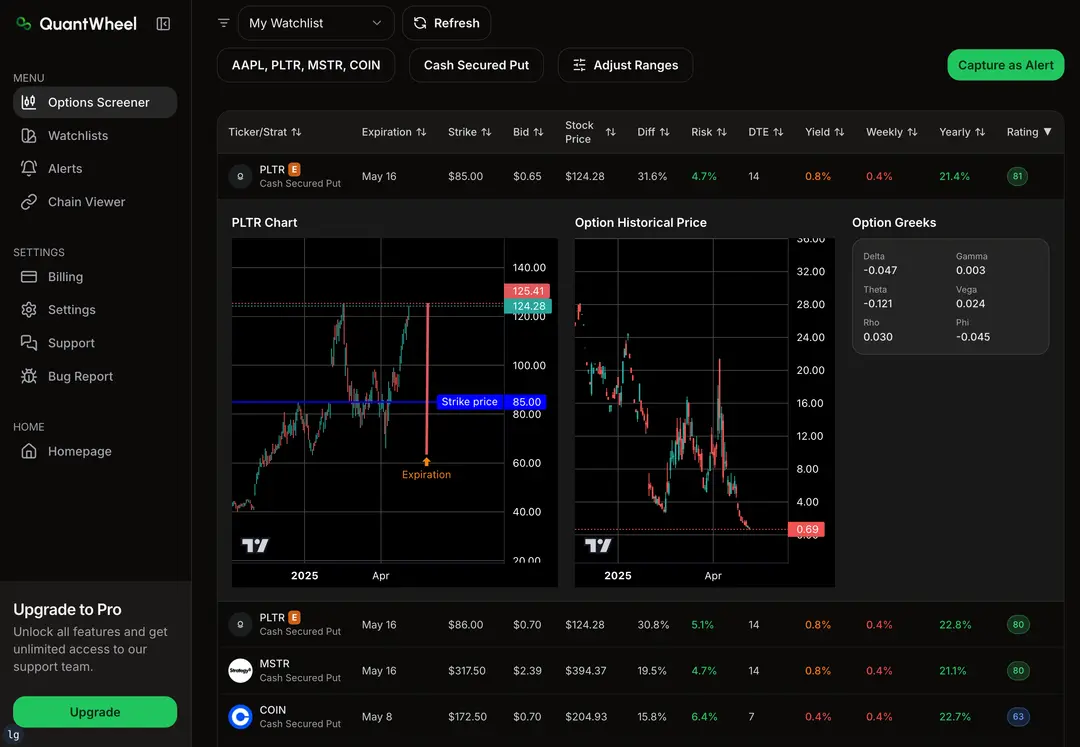
Every options contract has three key parts that work together.
These are the strike price, expiration date, and premium.
You need to understand all three to trade options successfully.
Strike Price
The strike price is the set price around which something happens.
The outcomes that might happen depend on what type of trade you choose your strike price for.
Buy a call – price at which you’re willing to own the the underlying asset
Buy a put – price at which you’re willing to sell the the underlying asset.
Sell a call – price at which you’re willing to sell the underlying asset you already own (if that’s your strategy) or price at which you think there’s no way for the stock to reach it with a goal of just collecting the premium from the trade.
Sell a put – price at which you’re willing to buy the underlying asset if it drops (if that’s your strategy) or price at which you think there’s no way for the stock to fall down to with a goal of just collecting the premium from the trade.
This price stays the same no matter how the stock moves.
| Action | What the Strike Price Represents for YOU |
|---|---|
| Buy Call | The price you get to BUY at (if stock goes higher). |
| Sell Call | The price you are forced to SELL at (if stock goes higher). |
| Buy Put | The price you get to SELL at (if stock goes lower). |
| Sell Put | The price you are forced to BUY at (if stock goes lower). |
How to choose the right strike price?
If you’re selling options, it depends on what you want to do in a trade.
Want to get assigned and own that stock once it falls? Pick a strike closer to current stock price.
Don’t want to get assigned and want to just collect the premium? Pick a strike price further away from current stock price.
If you’re buying options, it depends on two factors.
To choose the right strike price you have to look at what your break-even price is.
Also, you have to look for the likelihood of the stock reaching that breakeven price.
The formula:
-
Step 1: Find the Breakeven (Strike + Premium) you’re comfortable with.
-
Step 2: Check implied volatility for that expiration.
Your possibilities when buying options:
You can pick cheaper but more “lottery” styled buy calls/buy puts by going “out of money”(OTM) more.
This means that the stock still needs to move significantly for you to make a profit on that trade.
You can pick more expensive but safer styled buy calls/buy puts by going “in the money”(ITM) more.
This means that, once you’re already in the trade, it has some value and it doesn’t need to move as much for you to make a profit on that trade.
Expiration Date
Your options contracts have an end date called expiration. After this date, your option becomes worthless if you don’t use it.
Options can expire in days, weeks, months, or even years.
Longer expiration dates cost more because you have more time for the stock to move in your favor.
Premium
If you’re buying options:
The premium is what you pay to buy the option contract.
This is your cost and maximum risk as a buyer.
If you’re selling options:
The premium is what you get paid.
The premium has two parts:
- Intrinsic value: How much the option is worth right now
- Time value: Extra cost for the time left until expiration
How They Work Together
These three concepts connect directly.
The strike price determines if your option makes money.
The expiration date sets your time limit.
The premium shows your total cost of a trade if you’re buying options or profit if you sell options.
When you pick options, you choose the strike price and expiration date that fit your plan.
The market sets the premium based on these choices.