What Exactly Is An Option And How Is It Different From A Stock?
Welcome to the article that goes a little bit deeper about options.
An option is a contract. It gives you the right (but not the obligation) to buy or sell a stock at a specific price by a certain date.
You can choose whether or not to use this right. It’s entirely up to you.
What does this even mean?
Basically, it means that if you are in a trade and the market moves in your favor, you can use <>your right<> to make a profit.
If things don’t go your way, you can simply let the option expire and lose only the small price you paid for it.
A stock, on the other hand, is a piece of actual ownership in a company. When you buy shares, you literally own a slice of that business.
Key Differences
| Stocks | Options |
| You own shares of a company | You own a contract with rights |
| No expiration date | Expires on a set date |
| Direct ownership | No ownership until exercised |
How Options Work
Options revolve around an underlying asset, usually a stock. Each contract controls 100 shares, which is kind of wild if you think about the leverage.
To even start trading options, you either need to:
1) Own 100 shares of a stock.
2) Have enough cash in account to buy those 100 shares.
3) Buy an option with cash and sell it for profit to someone else (lowest entry but the riskiest).
The Big Difference
Stocks let you own something real right away. Options just give you the right to buy or sell – no obligation at all.
If you don’t use your option, it expires worthless. This is like saying “Hey, remember that deal we bet we had? I won, pay me”. But you can also shrug that deal off and say “whatever”.
Stocks? They never expire. You can hold them as long as you want.
Options usually cost way less upfront than buying shares outright.
What Is Special About Them That Most People Have Trouble Understanding?
Options have quirks that trip up a lot of new investors. The biggest one? You don’t actually own the stock or asset itself.
There’s this thing called time decay. Your option loses value every single day, even if the stock price doesn’t budge. It’s kind of sneaky and speeds up as expiration gets closer.
The leverage effect is another puzzle. Tiny moves in the stock price can make your option jump—or crash—in value. It cuts both ways, fast.
There are so many moving parts:
- Stock price movement
- Time until expiration
- Market volatility
- Interest rates
Managing risk with options can get complicated.
It gets easier with the right strategies and the right tools.
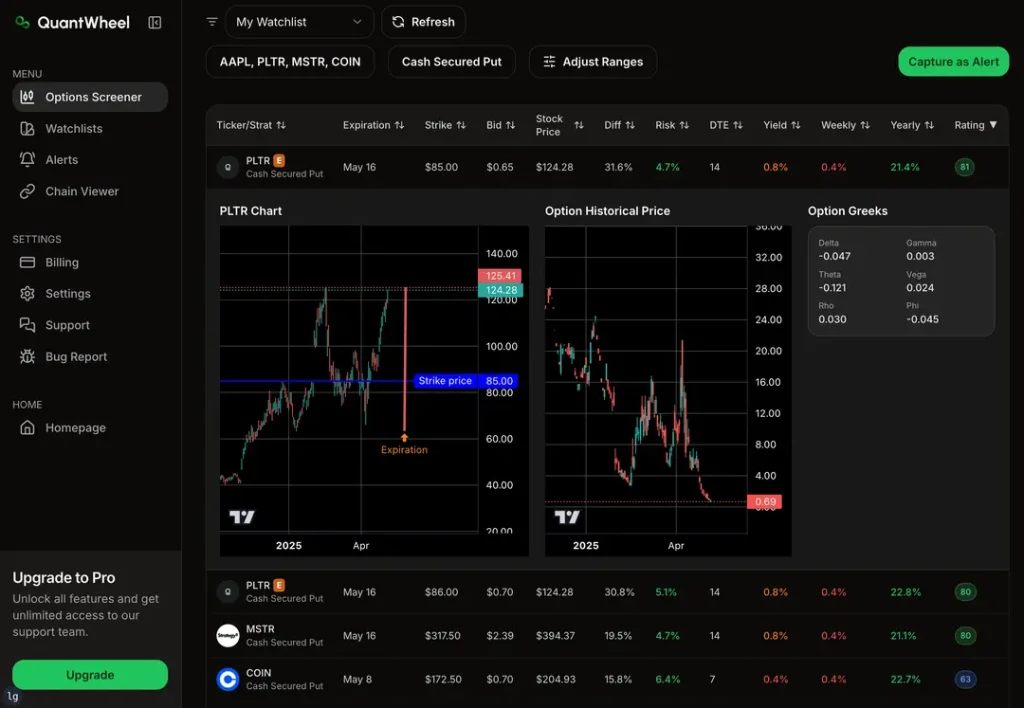
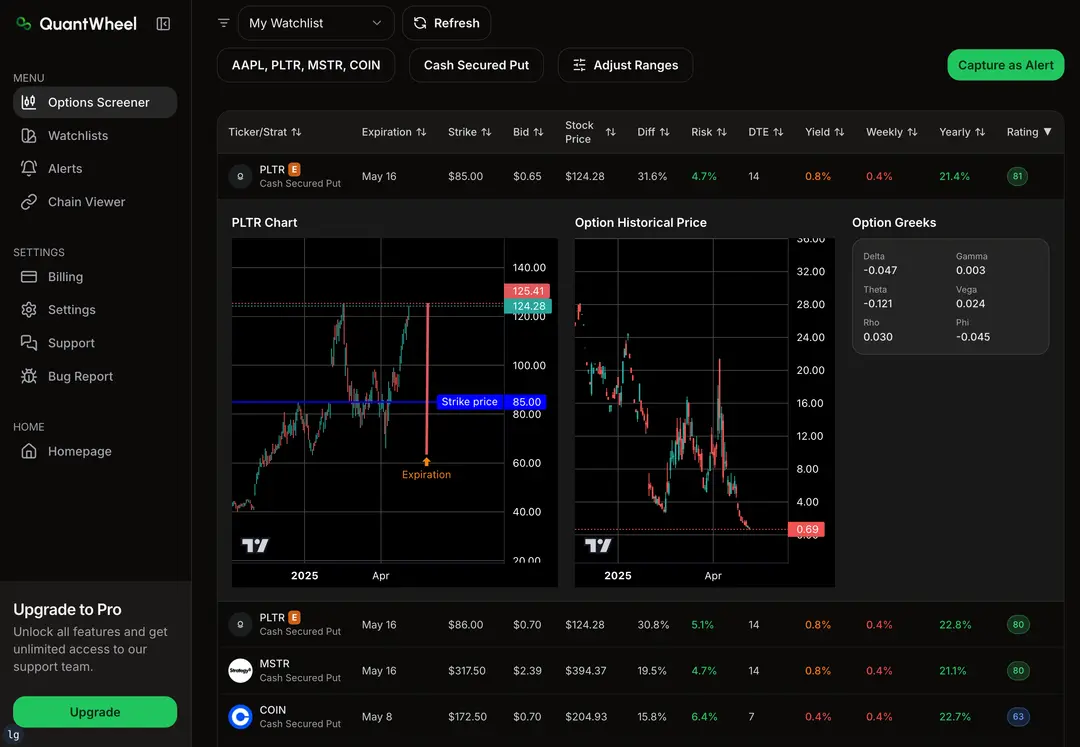
Check how QuantWheel tools can help you in your options trading here,
The income aspect is confusing, too. You can make money if stocks go up, down, or sideways, but only with the right approach.
People often misunderstand the insurance–like feature. Options can protect your portfolio, but this protection isn’t free but it helps you sleep tight.
Ever heard of the Greeks? Delta, theta, and the rest—they measure all sorts of risks. They are like a car’s dashboard where the little bulbs show you how much gas you have left, oil, are your lights turned on and if there’s any failure on your car.
Most folks just ignore them, I suggest for you to learn about them once you understand the basics – that comes later on in this course.
What Options Do? – Explanation for beginners
Options basically give you choices when it comes to buying or selling stocks. Imagine them as tickets letting you decide later if you want to make a move.
Call options give you the right to buy a stock at a fixed price. You’d use these if you think the stock will go up and you want to earn more than with just buying a stock which is often more expensive.
Put options let you sell a stock at a fixed price. Selling a stock means betting on it to go down. These are handy if you expect the stock to drop and want to earn extra.
Options are used in three main ways:
| Purpose | What It Does |
| Protection | Acts like insurance for your investments |
| Income | Earns money from stocks you own |
| Speculation | Lets you bet on stock price swings |
Now that you are aware of puts and calls..
You can use options to protect your money. If you own pricey stocks, buying puts can be insurance against losses.
Owning stocks during COVID-19 was like hell, and buying puts could have saved your portfolio by limiting your losses to -10% instead of -25%. Also, buying puts can earn you more if you expect the stock to go down – that’s the double purpose of buying puts.
Options can also bring in extra cash. Selling options on stocks you already own is a popular way to earn monthly income. Basically, this is opposite to buying calls and puts.
By selling calls or puts and saying “this won’t go up that much or this won’t fall that much – but even if it does I’m okay with that”.
You are practically using options as a monthly income strategy.
Some folks use options to take big swings with small amounts of money. It’s risky, but the potential payoff can be higher than just buying stocks.
The key difference? Flexibility.
You choose whether to use your option or just let it expire. No pressure to act if you change your mind.
Just remember, options do expire. If you don’t use them by the deadline, they become worthless.
Frequently Asked Questions
Options give you specific rights to buy or sell stocks at set prices before expiration. These contracts work differently for buyers and sellers, and there are all sorts of types for different strategies.