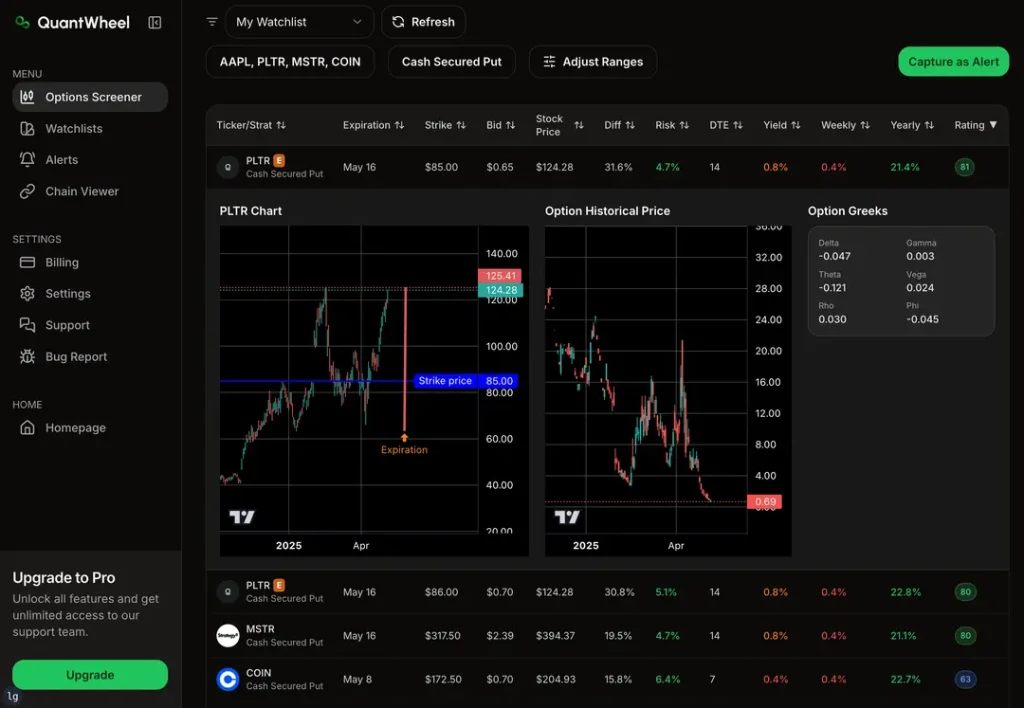
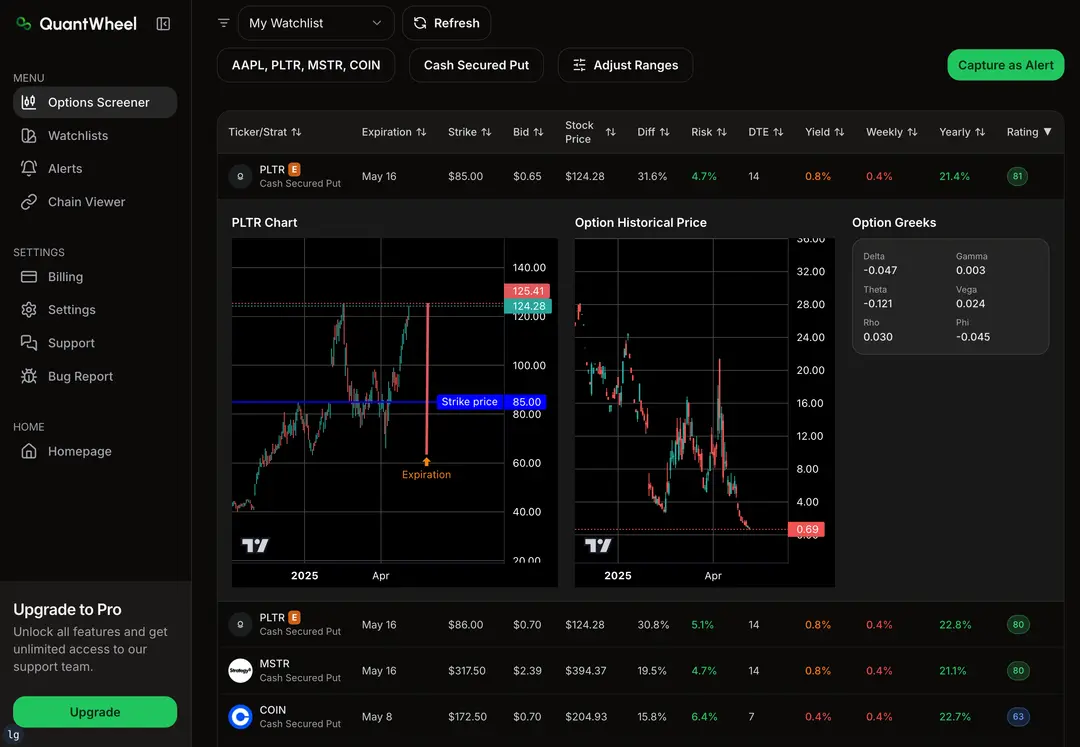
The wheel strategy is a popular options trading method that generates income from stocks you want to own. It works by selling cash-secured puts to collect premium, then selling covered calls if you get assigned the stock.
The strategy creates a cycle where you either keep the premium from expired options or acquire stock at a discount, then sell calls against those shares. Many traders use this approach because it can produce steady income while potentially building a stock position over time.
This method works best with stable stocks that trade within a range. You need enough cash to buy 100 shares of your chosen stock since options contracts represent 100 shares each.
How the Wheel Strategy Works
The wheel strategy combines selling put options and covered calls to generate steady income from stocks you want to own. This three-step process lets you collect premium payments while building a stock portfolio over time.
Understanding the Basics of the Wheel Strategy
The wheel strategy is an options trading method that generates income through premium collection. You start by selling cash-secured puts on stocks you would like to own.
When you sell a put option, you receive premium money upfront. This put contract gives someone else the right to sell you 100 shares at a specific strike price before expiration.
You need enough cash in your account to buy 100 shares if the option gets exercised. This is called a cash-secured put because you have the money ready.
If the stock price stays above your strike price, the put expires worthless. You keep the premium as profit and can sell another put.
If the stock price falls below your strike price, you get assigned. This means you must buy 100 shares at the strike price. Now you own the underlying security.
Once you own shares, you move to the second part of the wheel. You sell covered calls against your stock position to collect more premium income.
Step-by-Step Breakdown of the Wheel Process
Step 1: Sell a cash-secured put on a stock you want to own. Choose a strike price below the current market price. Collect the premium payment immediately.
Step 2: Wait for expiration. If the stock stays above your strike price, the put expires worthless. You keep the premium and repeat step 1.
Step 3: If the stock falls below your strike price, you get assigned 100 shares. You now own the stock at your strike price.
Step 4: Sell covered calls against your shares. Choose a strike price above what you paid for the stock. Collect premium from the call option sale.
Step 5: If the stock price stays below your call strike price, the call expires worthless. Keep the premium and sell another call.
Step 6: If the stock rises above your call strike price, your shares get called away. You sell your shares at the call strike price and return to step 1.
This creates a continuous cycle of premium collection and stock ownership. You generate income whether you own the stock or not.
Key Concepts: Options, Puts, and Calls
Options contracts give someone the right to buy or sell 100 shares of stock at a specific price before expiration. You collect premium when you sell these contracts to other traders.
Put options give the buyer the right to sell you shares. When you sell puts, you might have to buy shares if the price drops below your strike price.
Call options give the buyer the right to buy shares from you. When you sell calls against shares you own, you might have to sell those shares if the price rises above your strike price.
The premium you collect depends on several factors. These include the stock’s volatility, time until expiration, and how close the strike price is to the current stock price.
Assignment happens when the option buyer exercises their right. For puts, you must buy shares. For calls, you must sell shares.
Your profit comes from keeping premium payments and any capital gains when shares get called away above your cost basis.
Benefits, Risks, and Practical Considerations
The wheel strategy offers steady income through option premiums but requires careful risk management and proper execution. Success depends on your risk tolerance, capital requirements, and market analysis skills.
Potential Income and Profit Opportunities
You earn money from option premiums at each step of the wheel strategy. When you sell cash-secured puts, you collect premium income immediately.
If the put expires worthless, you keep the entire premium as profit. This happens when the stock price stays above your strike price.
When you get assigned shares, you lower your cost basis by the premium you received. For example, if you sold a $50 put for $2 premium and got assigned, your real cost basis becomes $48 per share.
You can earn additional income from dividends while holding the stock. Many wheel strategy stocks pay quarterly dividends that boost your total returns.
Selling covered calls generates more premium income on your shares. You collect this money upfront regardless of what happens to the stock price.
The strategy works best in sideways or slightly bullish markets. You profit from time decay as options lose value over time.
Risks and Risk Management
Your biggest risk is significant stock price drops after assignment. If a $50 stock falls to $30, you face a $20 per share paper loss even after premium income.
Capital requirements are substantial since you need enough money to buy 100 shares per contract. A $100 stock requires $10,000 in available capital for one put contract.
You might miss out on large price gains if your covered calls get assigned. The stock could rise well above your call strike price, limiting your profit potential.
Market volatility affects option premiums and your strategy success. Low volatility reduces premium income, while high volatility increases assignment risk.
Earnings announcements and news events can cause sudden price movements. These unexpected changes can lead to early assignment or larger losses than expected.
You need strong risk tolerance since losses can be substantial. Only use money you can afford to tie up for months or years.
Best Practices and Strategy Optimization
Choose stocks you want to own long-term in case of assignment. Focus on stable companies with good fundamentals and dividend histories.
Start with liquid stocks that have tight bid-ask spreads. This reduces your trading costs and makes it easier to manage positions.
Target 30-45 days to expiration for optimal time decay. This timeframe balances premium collection with manageable risk exposure.
Set strike prices 10-20% out of the money for puts and calls. This provides a safety buffer while still generating reasonable premium income.
Monitor your portfolio regularly and adjust based on market conditions. Be ready to roll options or take profits when opportunities arise.
Keep detailed records of all premiums, assignments, and costs. Track your overall performance including dividends and capital gains or losses.
Diversify across multiple stocks rather than concentrating on one position. This spreads your risk and smooths out your income over time.