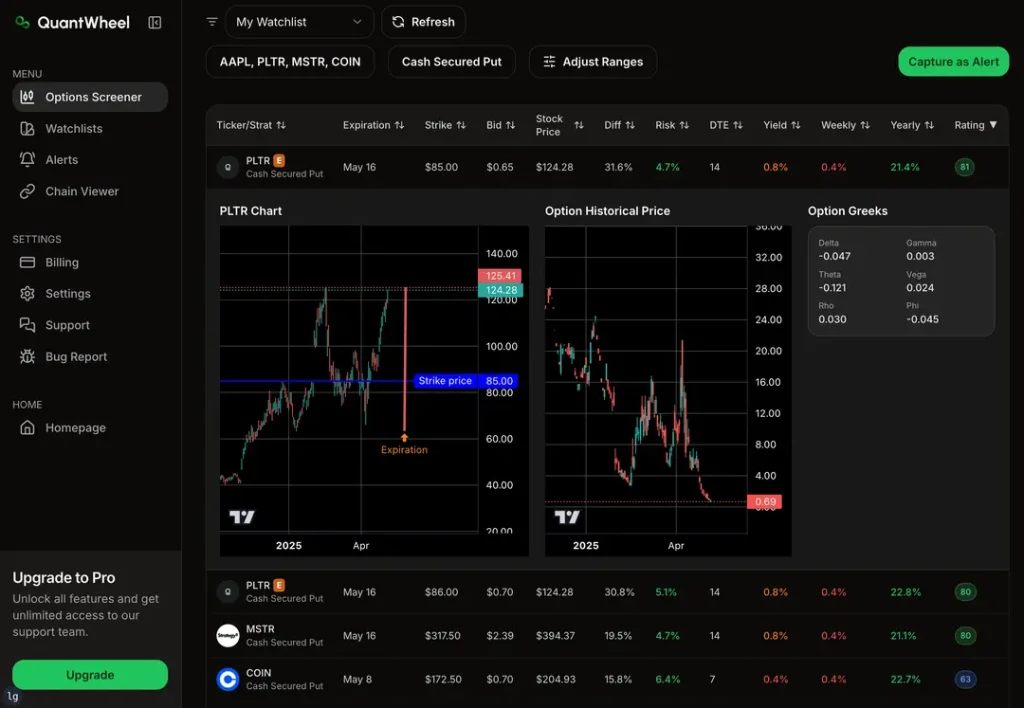
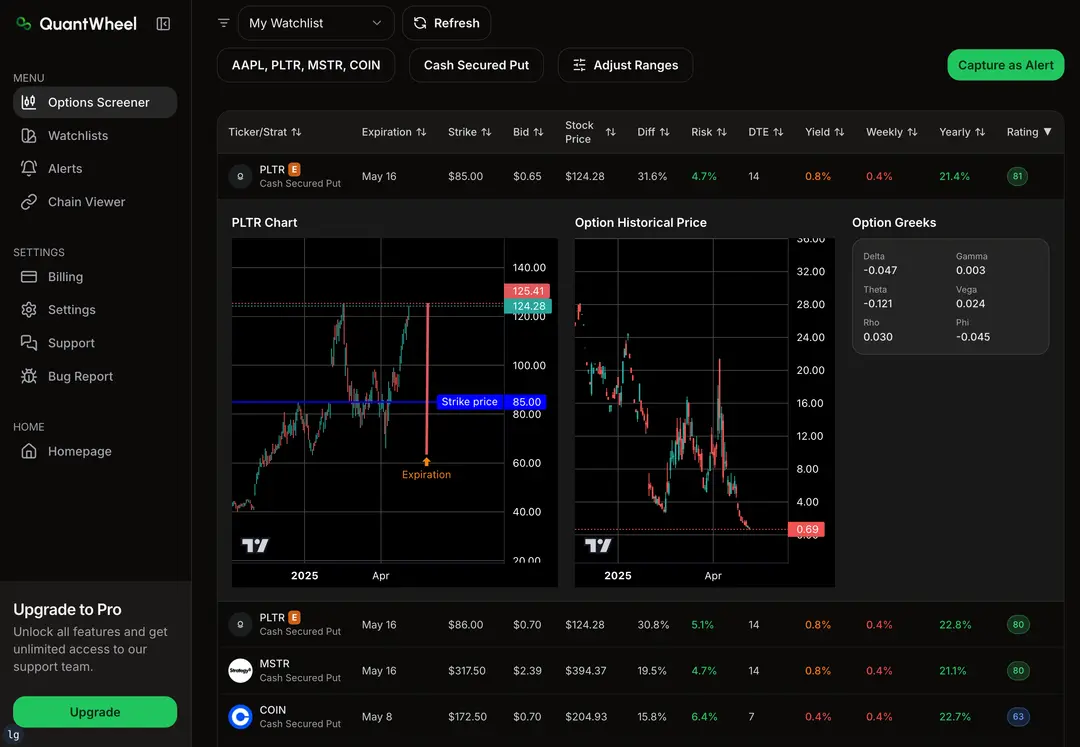
Cash secured puts offer a way to generate income while potentially buying stocks at lower prices. The key to success lies in choosing the right strike price for your situation.
Your strike price should align with the price you’re willing to pay for the stock while providing enough premium to justify the risk. This balance determines both your potential income and the likelihood of owning the shares.
The wrong strike price can lead to missed opportunities or unwanted outcomes. Smart selection requires understanding how different strike prices affect your premium income and assignment risk.
Key Takeaways
- Choose strike prices at or below the price you want to pay for the underlying stock
- Higher strike prices generate more premium income but increase your assignment risk
- Consider the stock’s support levels and your overall investment goals when selecting strikes
Key Factors in Strike Price Selection
The strike price you choose affects your risk, potential return, and chances of assignment. Market conditions and volatility play major roles in determining the best strike price for your investment goals.
Understanding the Strike Price
The strike price is the price at which you agree to buy the stock if assigned. When you sell a cash secured put, you collect premium upfront. The buyer has the right to sell you 100 shares at your strike price.
Your strike price should be at or below a price you want to pay for the stock. If the stock price falls below your strike price at expiration, you will likely get assigned. This means you buy the shares at the strike price.
Higher strike prices offer more premium but increase assignment risk. Lower strike prices provide less premium but reduce your chance of buying the stock.
The strike price directly impacts your cost basis if assigned. Your total cost per share equals the strike price minus the premium you received.
Evaluating Risk and Reward Trade-Offs
Premium income increases as you select strike prices closer to the current stock price. This creates a key trade-off between income and risk.
At-the-money puts generate high premium but carry the highest assignment risk. Out-of-the-money puts offer lower premium but better protection against assignment.
Consider your capital requirements carefully. Each put contract requires cash equal to the strike price times 100 shares. A $50 strike price needs $5,000 in your account.
Your return calculation should include both premium income and potential stock appreciation. If assigned, your maximum profit occurs when the stock rises above your effective purchase price.
Assignment risk increases when the stock price drops below your strike price. Monitor your position closely as expiration approaches.
Analyzing Volatility and Market Conditions
High volatility increases option premium across all strike prices. This gives you better income opportunities but often signals unstable market conditions.
Implied volatility affects premium more than historical volatility. Check volatility rankings before selecting your strike price to ensure fair premium compensation.
Market trends influence optimal strike price selection. In bull markets, higher strike prices may offer better risk-adjusted returns. In bear markets, lower strike prices provide more safety.
Economic events and earnings announcements can spike volatility temporarily. These periods often present attractive premium opportunities for cash secured put sellers.
Time to expiration also matters. Longer-dated options with the same strike price typically offer more premium but tie up your capital longer.
Best Practices for Cash Secured Puts Strike Price Selection
Successful cash secured puts trading requires careful strike price selection based on your investment objectives and risk tolerance. The right approach balances premium income with assignment probability while protecting your portfolio from excessive losses.
Aligning Strike Price with Investment Goals
Your strike price choice should match what you want from your investment. If you want steady income, pick strikes closer to the current stock price. These options pay higher premiums but have greater assignment risk.
For long-term stock ownership goals, choose strikes at prices where you’d be happy owning shares. This approach focuses less on premium and more on entry points. You’ll get assigned at favorable prices when the stock drops.
Income-focused approach:
- Strike prices 5-10% below current stock price
- Higher premium collection
- Greater assignment probability
Ownership-focused approach:
- Strike prices 15-20% below current stock price
- Lower premium but safer entry points
- Reduced assignment risk
Match your strike selection to your timeline. Short-term traders often prefer higher premiums. Long-term investors prioritize good stock entry prices.
Managing Portfolio Risk with Puts
Risk management starts with position sizing. Never sell more puts than you can afford to purchase if assigned. Each put controls 100 shares, so calculate your total exposure carefully.
Diversify your put strikes across different stocks and sectors. This prevents concentration risk if one stock drops significantly. Spread your cash across multiple positions rather than one large trade.
Monitor your total portfolio exposure. If you sell 10 puts at $50 strikes, you’re committed to buying $50,000 worth of stock. Make sure this fits your available cash and risk limits.
Set maximum loss limits per position. Consider closing puts early if the stock drops too far below your strike price. This prevents deeper losses if assignment occurs.
Optimizing Premium Versus Probability of Assignment
Balance premium income against assignment risk using probability analysis. Out-of-the-money puts with 20-30% assignment probability often provide good risk-reward ratios.
Higher premiums come with higher assignment risk. A put paying $2 premium might seem attractive, but check why it’s paying so much. The stock might be risky or volatile.
Premium optimization factors:
- Time to expiration (30-45 days optimal)
- Implied volatility levels
- Distance from current stock price
- Market conditions
Use options analysis tools to compare different strikes. Look at premium per day and assignment probability together, not just total premium collected.
Consider rolling strategies when positions move against you. Sometimes accepting a small loss and rolling to a new strike preserves capital better than assignment.
Example Scenarios for Different Market Environments
Bull Market Strategy: In rising markets, sell puts 10-15% out of the money. Stocks rarely drop to assignment levels, so you keep most premiums. Focus on quality stocks you’d own anyway.
Bear Market Strategy: Move strikes further out of the money, 20-25% below current prices. Accept lower premiums to reduce assignment risk. Markets can drop quickly and stay down longer.
Sideways Market Strategy: Use closer strikes 5-10% out of the money. Premiums decay faster when stocks trade in ranges. Higher assignment risk is acceptable when prices are stable.
High Volatility Periods: Collect higher premiums but use wider safety margins. Volatile stocks can gap down past your strikes quickly. Consider shorter expirations to capture volatility premium.
Example Trade: XYZ stock trades at $100. In a bull market, sell the $90 put for $1.50. In a bear market, sell the $80 put for $0.75. The bear market strike offers better downside protection despite lower premium.