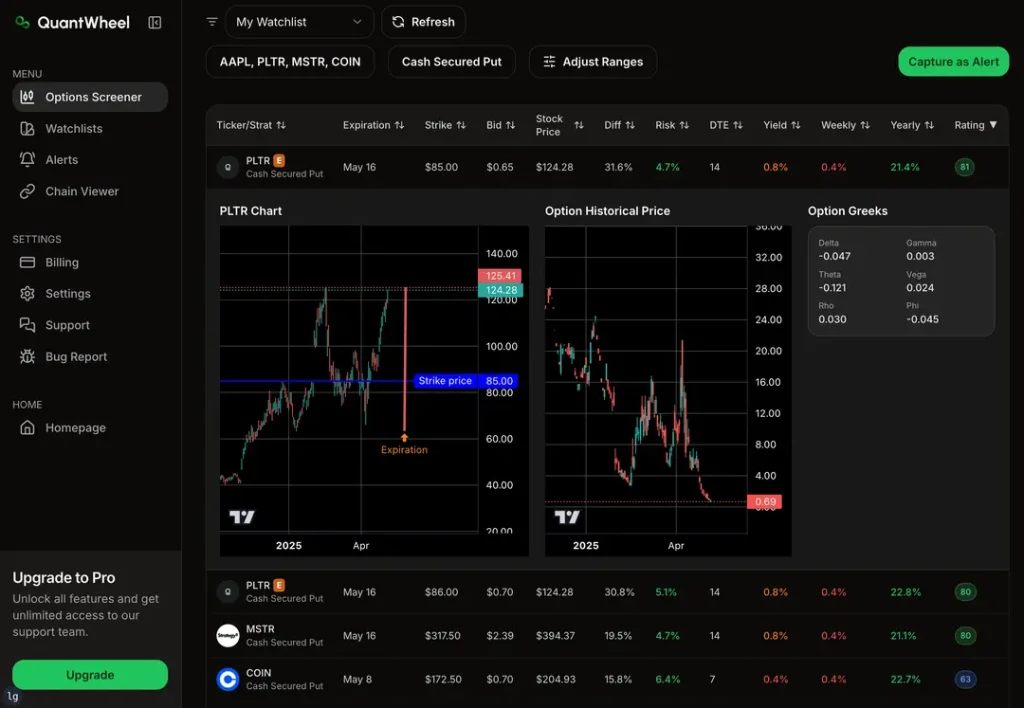
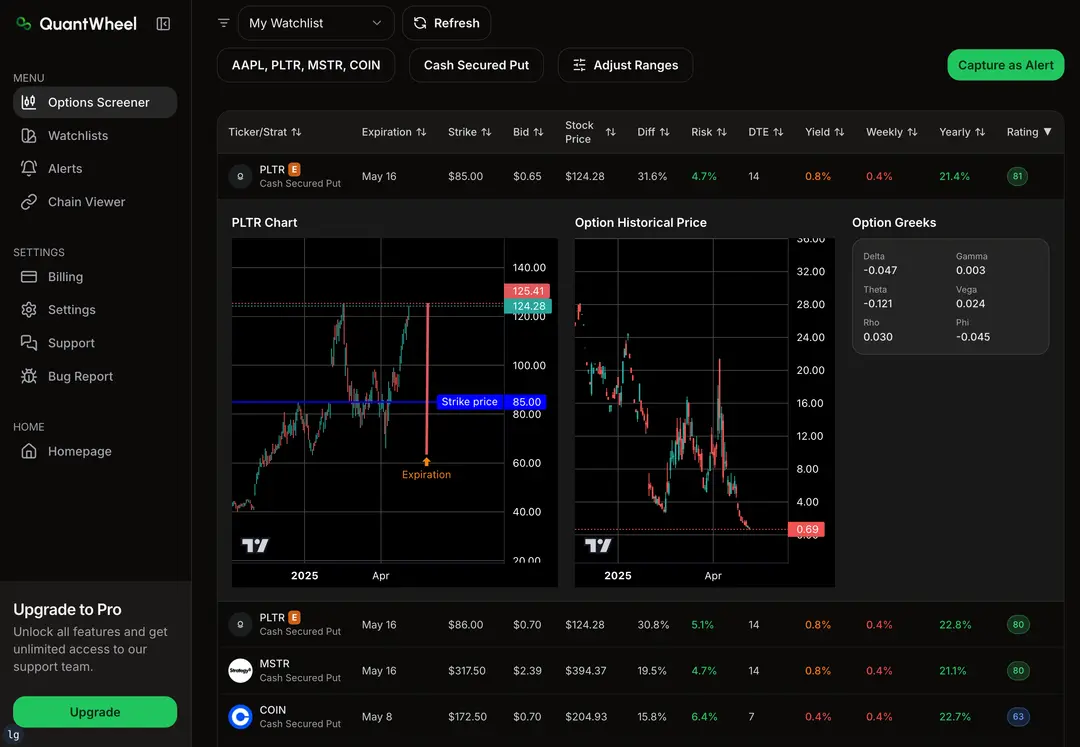
A cash secured put is an options strategy where you sell a put option while holding enough cash to buy the underlying stock if the option gets assigned. This approach lets you earn income from the premium while potentially acquiring shares at a lower price.
When you sell a cash secured put, you collect money upfront from the buyer. You keep this premium regardless of what happens to the stock price. If the stock price stays above the strike price, the option expires worthless and you keep the premium as profit.
This strategy works well when you want to own a particular stock but prefer to buy it at a discount. You get paid to wait for the stock to drop to your desired price. If it doesn’t drop, you still earn income from the premium you collected.
Understanding How Cash Secured Puts Work
Cash secured puts involve selling put options while holding enough cash to buy 100 shares of the underlying stock at the strike price. The seller collects premium income and agrees to purchase shares if assigned.
Key Concepts in Cash Secured Put Strategies
A cash secured put is a put option strategy where you sell a put contract on a stock you want to own. You must keep enough cash in your account to buy 100 shares at the strike price.
When you sell the put option, you collect a premium from the buyer. This premium becomes your income regardless of what happens to the stock price.
The strike price is the price you agree to pay for the stock if assigned. You choose this price when you sell the put contract.
Expiration is the date when the option contract ends. Most put options expire on the third Friday of the month.
Your collateral is the cash you set aside to buy the shares. This money stays in your account until the contract expires or you get assigned.
The underlying security is the stock tied to your put option. You should only sell puts on stocks you actually want to own at the strike price.
Steps Involved in Executing a Cash Secured Put
First, choose a stock you want to buy at a lower price. Research the company and decide what price makes sense for your portfolio.
Next, select a strike price below the current market price. This strike price should be a price you feel comfortable paying for the stock.
Set aside cash equal to 100 shares times the strike price. Your broker will hold this cash as collateral for the trade.
Sell the put option and collect the premium. This money goes into your account right away.
Wait until expiration to see what happens. If the stock price stays above your strike price, you keep the premium and the cash.
If the stock drops below the strike price, you may get assigned. This means you must buy 100 shares at the strike price.
Roles of Buyer and Seller in the Contract
As the seller of the cash secured put, you have an obligation to buy shares if assigned. You cannot choose whether or not to buy the stock.
The buyer of your put option pays you the premium upfront. They have the right to sell you 100 shares at the strike price.
You take on risk as the seller because you must buy the stock even if it drops significantly. The buyer’s risk is limited to the premium they paid.
The buyer will likely exercise the option if the stock price falls below the strike price. This is called assignment.
When assignment happens, you buy 100 shares at the agreed strike price. The buyer sells you their shares at this higher price.
Examples of Cash Secured Put Situations
Imagine you want to buy XYZ stock, currently trading at $50 per share. You sell a put option with a $45 strike price for $2 premium.
You set aside $4,500 cash as collateral. If XYZ stays above $45, you keep the $200 premium and your cash.
If XYZ drops to $40, you get assigned and buy 100 shares for $4,500. Your actual cost is $43 per share after the premium income.
Another example involves ABC stock trading at $100. You sell a $90 strike put for $3 premium and hold $9,000 cash.
If ABC falls to $85, you buy shares at $90 but your real cost is $87 per share. You now own the stock at a discount to the original $100 price.
Assessing Risks, Returns, and Practical Considerations
Cash secured puts involve specific capital requirements and risk factors that affect your returns. Understanding the profit scenarios, tax treatment, and trading costs helps you make better decisions about this strategy.
Managing Risk and Capital Requirements
Cash secured puts require you to hold enough cash to buy 100 shares at the strike price. This ties up significant capital in your account.
Your maximum loss equals the strike price minus the premium received. For example, if you sell a $50 put for $2, your maximum loss is $48 per share or $4,800 per contract.
Capital Requirements:
- Full cash amount (strike price × 100)
- No margin borrowing allowed
- Funds must stay in account until expiration
The cash requirement reduces your portfolio flexibility. You cannot use these funds for other investments while the put remains open.
Risk increases if the stock drops significantly below the strike price. Your losses grow as the stock price falls further.
Potential Outcomes and Profit Scenarios
Three main outcomes exist when trading cash secured puts:
Scenario 1: Put expires worthless The stock stays above the strike price. You keep the full premium as profit without buying shares.
Scenario 2: Assignment occurs The stock drops below the strike price. You must buy 100 shares at the strike price but keep the premium received.
Scenario 3: Closing early You buy back the put before expiration. Your profit or loss depends on the premium paid versus received.
Your maximum profit equals the premium collected. This happens when the put expires worthless.
Break-even occurs at the strike price minus the premium received. Below this price, you face losses on the position.
Tax and Fee Implications in Cash Secured Put Trading
Premium income from cash secured puts receives tax treatment as short-term capital gains. You owe taxes on the premium in the year you receive it.
Tax Considerations:
- Premiums taxed as ordinary income
- Assignment changes tax treatment
- Consult a tax advisor for specific situations
If assignment occurs, the premium reduces your cost basis in the acquired shares. This affects future capital gains calculations when you sell the stock.
Trading Costs:
- Commission fees for opening positions
- Assignment fees if exercised
- Bid-ask spreads reduce profits
Frequent trading increases your total fees. These costs eat into your returns over time.
Some brokers charge higher fees for options trading. Compare costs across platforms before choosing where to trade cash secured puts.